Cabernet in Australia and the creation of quintet
Vines arrived in Australia with the first fleet in 1788 but details of the varieties and where they were planted are hard to find. I can’t promise that Cabernet was amongst them. One well documented fact is that James Busby, a British emigrant who first arrived in 1824, imported Cabernet grapes into NSW in 1832. This was just one more geographical milestone for the world’s most widely planted grape. Busby’s main focus was in the Hunter but during the 1830’s the industry also took off in Victoria (1834) and South Australia (1838) where wines made from the Cabernet family are now respected worldwide. Just how much of Busby’s Cabernet material made it south and west is not known and given how much we now know of ampelography (the identification and classification of grape vines) and how little we knew then, it may remain a mystery.
The Yarra features very prominently in the history of Cabernet in Australia. Indeed, the Yarra’s journey in viticulture began around 1837 on the site where Chateau Yering now stands. Although, as I have written about previously, Pinot noir was featured in the first plantings, it wasn’t long before Cabernet sauvignon and Cabernet franc were favoured by industry pioneers Paul de Castella and Samuel de Pury. The de Castella’s and the de Pury’s initially arrived from Switzerland with the intention of pastoral pursuits, mainly growing wool. Joseph Deschamps, also Swiss and a former vineyard manager from Neuchatel, encouraged a working interest in viticulture in spite of his countrymen expressing grave doubts about the viability of switching to wine. In fact, Hubert de Castella, who pursued various agricultural experiments with Guillaume de Pury, was quoted as saying upon his return to Switzerland “we left wool, the only well-beaten and safe road in Australia, in order to engage in an unknown and almost inextricable thicket, wine culture, in a country devoid of vignerons, where the only drinks are beer and alcohol (presumably meaning spirits)”.
Nevertheless they returned to our shores, pushed on and succeeded in establishing 100 acres of Cabernet at Yering with cuttings acquired from Chateau Lafite in Bordeaux. Before anyone assumes these vines were Cabernet sauvignon, the Cabernet family includes Sauvignon, Franc, Merlot, Malbec, Petit verdot and Petit bouschet which were all growing at Lafite. It is also apparent that cuttings from Yering ended up in other places such as Tahbilk. This material included Cabernet franc.
Back in the Yarra, the growing of Cabernet was not proving trouble free with frosts, disease (mainly mildew), low yields, inexperience and marketing challenges all contributing. In spite of the difficulties by 1878 St. Huberts had grown to 200 acres and both red and white wines from the Yering diaspora were famous around the world for their quality and favourable comparison to the best. I have written previously of how the industry declined from this high point to be virtually non-existent by 1930.
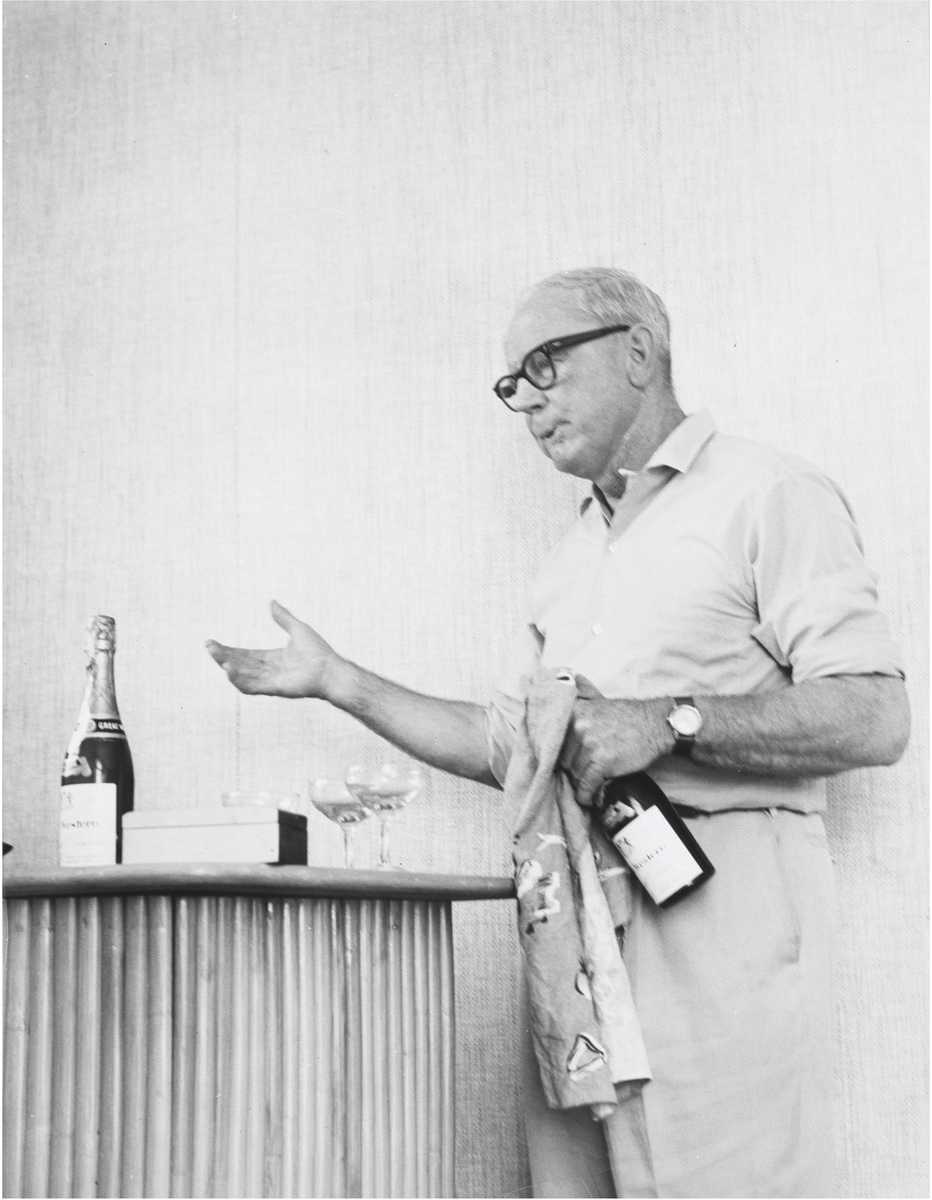
None of this detail was lost on John Middleton. He was fascinated by the history of wine in the Yarra. He knew well how this valley had produced world class Cabernet only one short lifetime ago. Encouraged by his close friend and mentor, Colin Preece, manager of vineyards and cellars at Seppelts, Great Western, he set about reprising the Yarra’s production of fine Cabernet. Colin himself had previously planted Cabernet at Great Western and indeed, seemed to prefer these varieties to Hermitage, however the vines were “shy bearers” and eventually abandoned as being uneconomic. Years later, John himself surmised that fungal diseases such as Esca and Eutypa, which Cabernet is known to be susceptible to, may have been the cause of this vine decline. By way of the proceedings of the Royal Society of Victoria, John got his hands on a list of plantings and vintage data from the 1894 vintage at Yering. He noticed in particular that the grapes were all French. By this stage John, although he had become extremely fond of the wine romance of Burgundy, was well and truly obsessed with the blends of the Medoc in Bordeaux. It is not surprising therefore that the Quintet which owes its existence to John’s enduring love for the Cabernet family became Mount Mary’s flagship.
John was very particular about site selection and getting the right variety in the right location. He felt that Cabernet sauvignon, more so than other varieties perhaps, had a narrow ripening window and a tendency to be hard, green and vegetal and lacking middle palate intensity. I often heard him berating newcomers to viticulture about their casual approach to site selection. “If you plant that there, it will never make good wine”. He was equally critical of growers delaying Cabernet harvest to the point where “most of the precious Cabernet aroma, perfume and flavour that Bordeaux is famous for is lost”.
It is not a great surprise to find that a variety taken from its cool northern hemisphere habitat, transported half-way around the world and planted into foreign soils in a harsh, hot, climate did not produce wines comparable to Bordeaux. It is even more astounding that growers persisted with delayed harvest and over ripening when even the most novice palate could appreciate the loss of character and quality particularly the loss of aroma, colour and delicacy in favour of harshness and coarseness.

John claimed he was the first in Australia to employ the suite of noble red grapes of Bordeaux in one blend. Perhaps he was right. He unashamedly admitted to copying the French who had proven the value of this form of winemaking over many generations. He also laid claim to pioneering the white blend of southern Bordeaux in the Yarra. It seems that this spirit of innovation continues in our pursuit of southern Rhone blends that derive from the seven varieties we planted in 2007. In the late 1960’s John had become disenchanted with Australian wines made from 100% Cabernet sauvignon grapes. He rallied endlessly against high alcohol, overripe, heavily extracted wines with harsh, aggressive tannins. What was the point of making wines like these that mercilessly assault the palate? This was the birth of the Quintet. John was to set out on a mission to soften these Cabernet features by means of blending the Cabernet family, judicious timing of harvest, quality oak exposure and traditional egg white fining. John was going to produce an alternative to “fruit dead wines that take a generation in bottle to calm down”. He was frustrated and annoyed that tannic wines remained popular amongst a large section of the wine drinking public. John felt that the tannins and the high alcohol levels masked the wine faults not to mention the “macho men” who were too “thick” to appreciate what they were consuming.
Having settled on what to plant, John now had to decide where. He was committed to the Yarra by virtue of his medical practice and having spent some years with experimental plantings at what is now Chirnside Park, began looking for soils and aspect recognised by the early pioneers as being suited to viticulture. A north facing, well drained slope of grey sandy clay loam was what he was after. Ironically the site that eventually came up for auction that fitted perfectly was a property that had been central in the view out his kitchen window for all those wine-dreaming years. The rest they say is history.
John’s concern about the sensitivity of Cabernet sauvignon to fungal trunk diseases proved to be correct and we have undergone many years of vine treatment, nursing and replacement. Much of the oldest Cabernet block (from which the JWDM was made) remains on the original roots but the trunks have been reconstructed from water shoots. Those of you who visit Mount Mary will notice the vast difference in the diameters between original and reconstructed trunks.
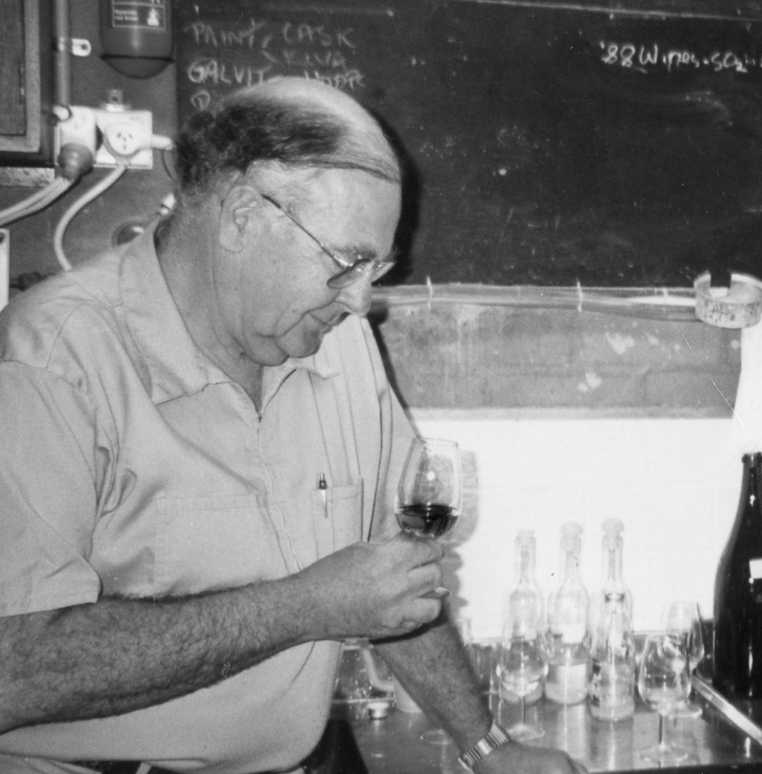
So that, in a few paragraphs, is how we grew from an ambitious and wild dream of John’s to a fully functioning, self-contained, family owned producer of an iconic Cabernet blend known as Quintet.
Whilst there are now many other grapes planted and many other wines produced here, the Quintet will remain our flagship. There seems little point in arguing about which varieties are most suited in this valley, which make the best wines, or what will happen in the future. For us the enduring appeal of our dear Quintet at least proves there is one family of grapes that has stood the test of time in this valley and one which, by virtue of the blend, will be here for many vintages to come.